AI-powered Ingredient scanning app for Indian grocery shoppers
We designed Ingrify, an ingredient scanning app for Indian consumers, to turn confusing food labels into instant, easy-to-understand health insights.
( App is under Transistion)
+10K
Downloads
+40%
Activation rate
+60%
in MAU
+49%
Weekly scan

Role
Product Designer
Project Type
Health & Food, Tech
Timeline
Jan'25– May'25
Team
2 Designers , 1 PM , 4 Devs
Backstory
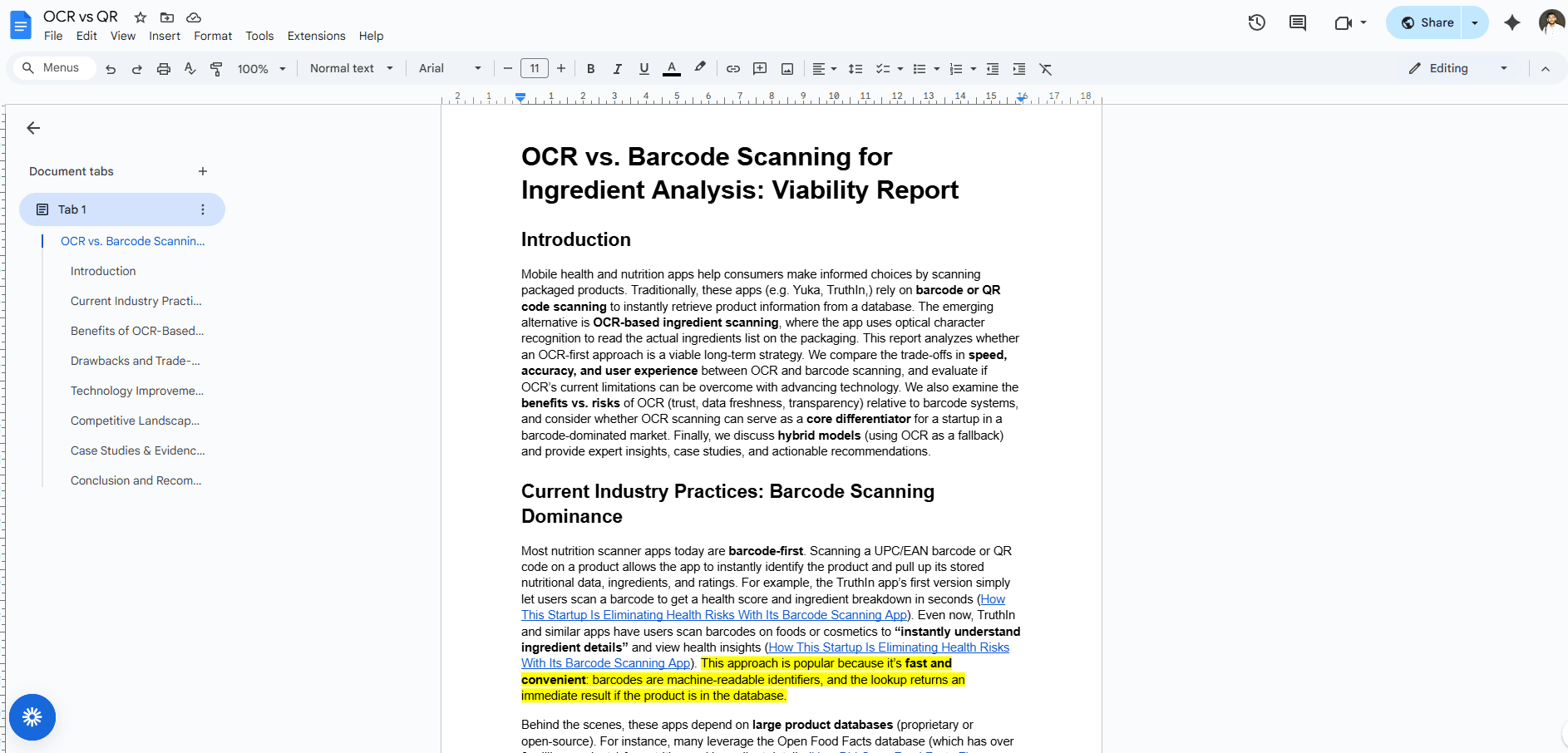
The Dev team initially built a prototype using OCR to extract and explain ingredient labels across any product through LLM models.
Technically, it worked. But OCR struggled with messy labels and AI explanations felt inconsistent.
The real question became:
Can this become something people actually trust?
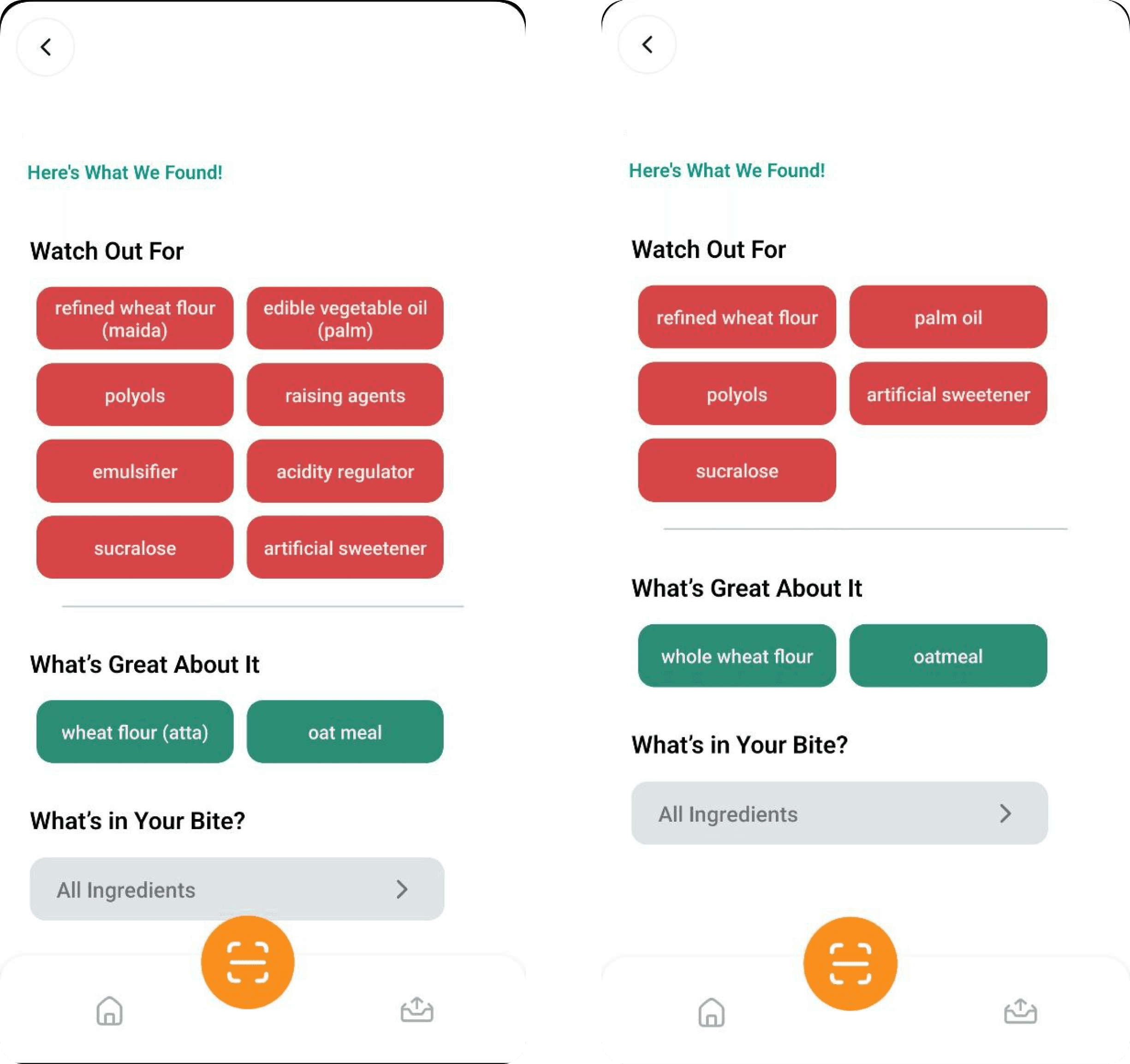
Same product different result
Same product different result ( Earlier version)
Problem
Most packaged products are full of bold marketing claims on the front and inconsistent and confusing
Ingredient labels at the back, not many shoppers fully understand ingredients (not without a chemistry or nutrition degree at least).
Technical terms and long lists make it hard to quickly judge whether the product can be consumed on a regular basis.
Solutions
Ingrify bridges the gap between confusing food labels and fast grocery decisions. By combining barcode scanning with AI ingredient analysis and personalized scoring, it delivers clear, relevant health insights in seconds helping users decide confidently before adding products to their cart.
Research/
Desk Research
I conducted Secondary research using existing studies, industry reports, and public discussions around food labels in India
Primary Research
Primary Research survey was conducted with 30+ participants, 4 user interviews and 2 Interviews with Nutritionists, focusing on everyday Indian consumers.
Simplicity
Most want quick Good vs Bad ingredient clarity first, with deeper breakdowns only when needed.
Simplicity
Most want quick Good vs Bad ingredient clarity first, with deeper breakdowns only when needed.
Relevance
People with allergies or dietary restrictions expect insights tailored to them, not generic ratings.
Relevance
People with allergies or dietary restrictions expect insights tailored to them, not generic ratings.
Personalization
People with dietary restrictions want products that match their health needs
Personalization
People with dietary restrictions want products that match their health needs
Key Insights from Surveys
Competitor Analysis/
I analyzed competitors like TruthIn, Yuka, TrashPanda to understand how users move from scanning to interpretation.
Goals
Establish what the market looks like right now. See if there is a direct competitor in this specific idea. Learn how other food scanning apps work.
Result
Most apps relied heavily on Barcode scan which depend on their or third-party database coverage and generic health scores, which struggle with Indian products and personalized needs.



How do we help everyday Indian shoppers understand ingredients instantly?
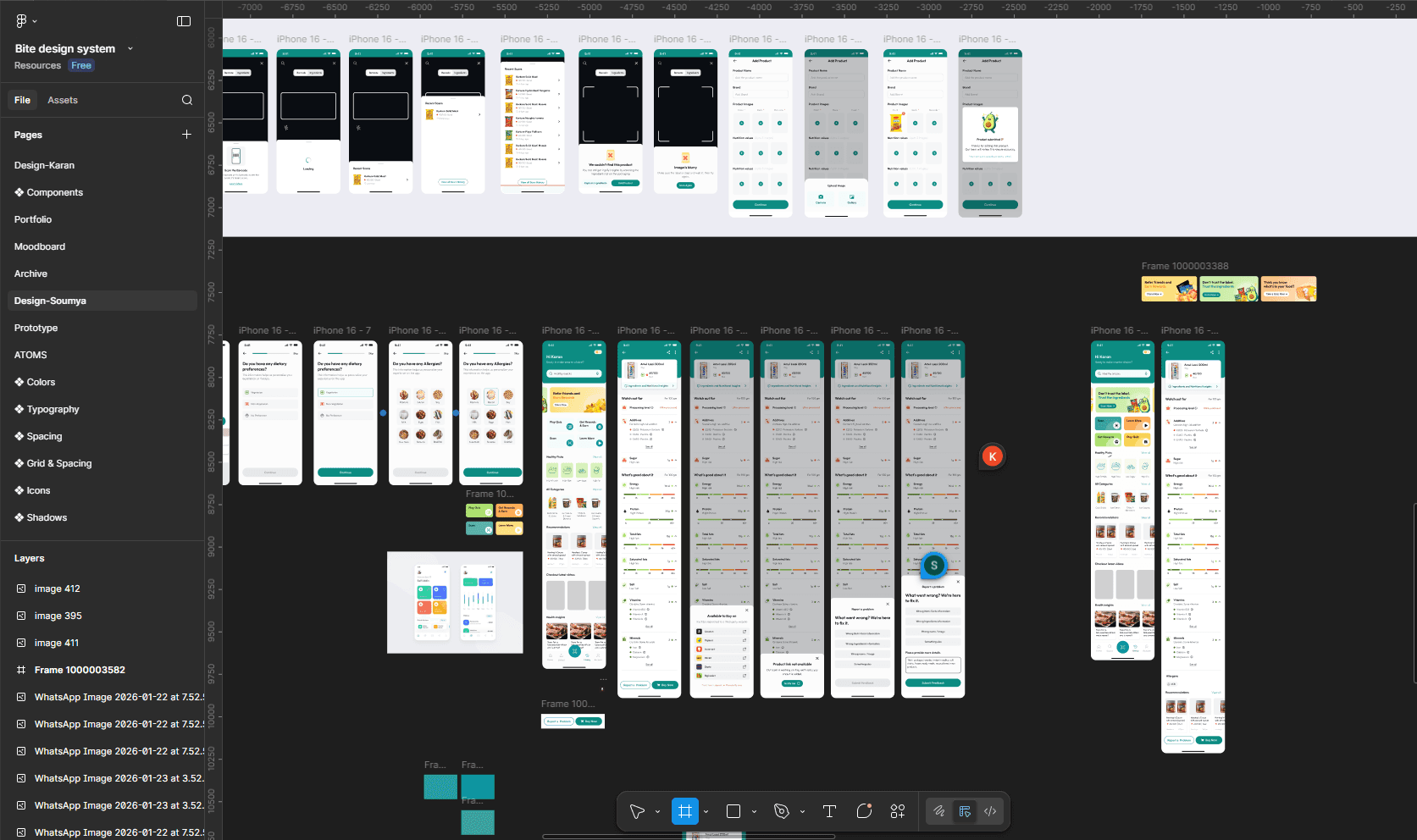
Building a MVP
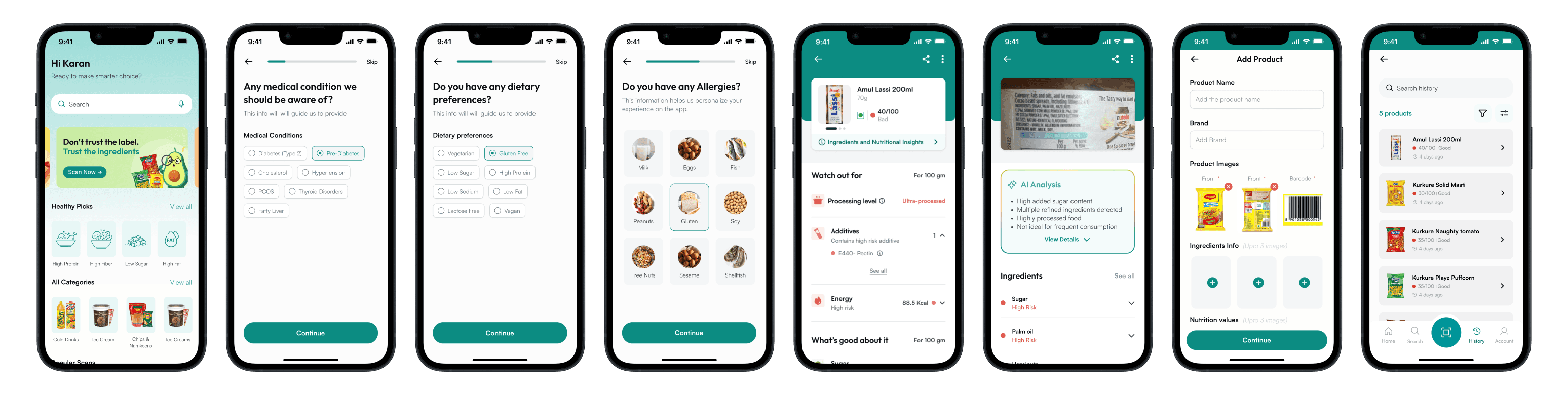
Through stakeholder discussions and competitive analysis, we proposed introducing barcode scanning as the primary entry point, with AI ingredient analysis as a fallback when products weren’t available in the database.
Barcode Scan
AI Ingredients Scan
Beyond the MVP
After the initial MVP launch , we started validating the the insights, began identifying the friction points and focused on to improve reliability, personalization and sustainability.
Add Product
History & Buy Now
Design/
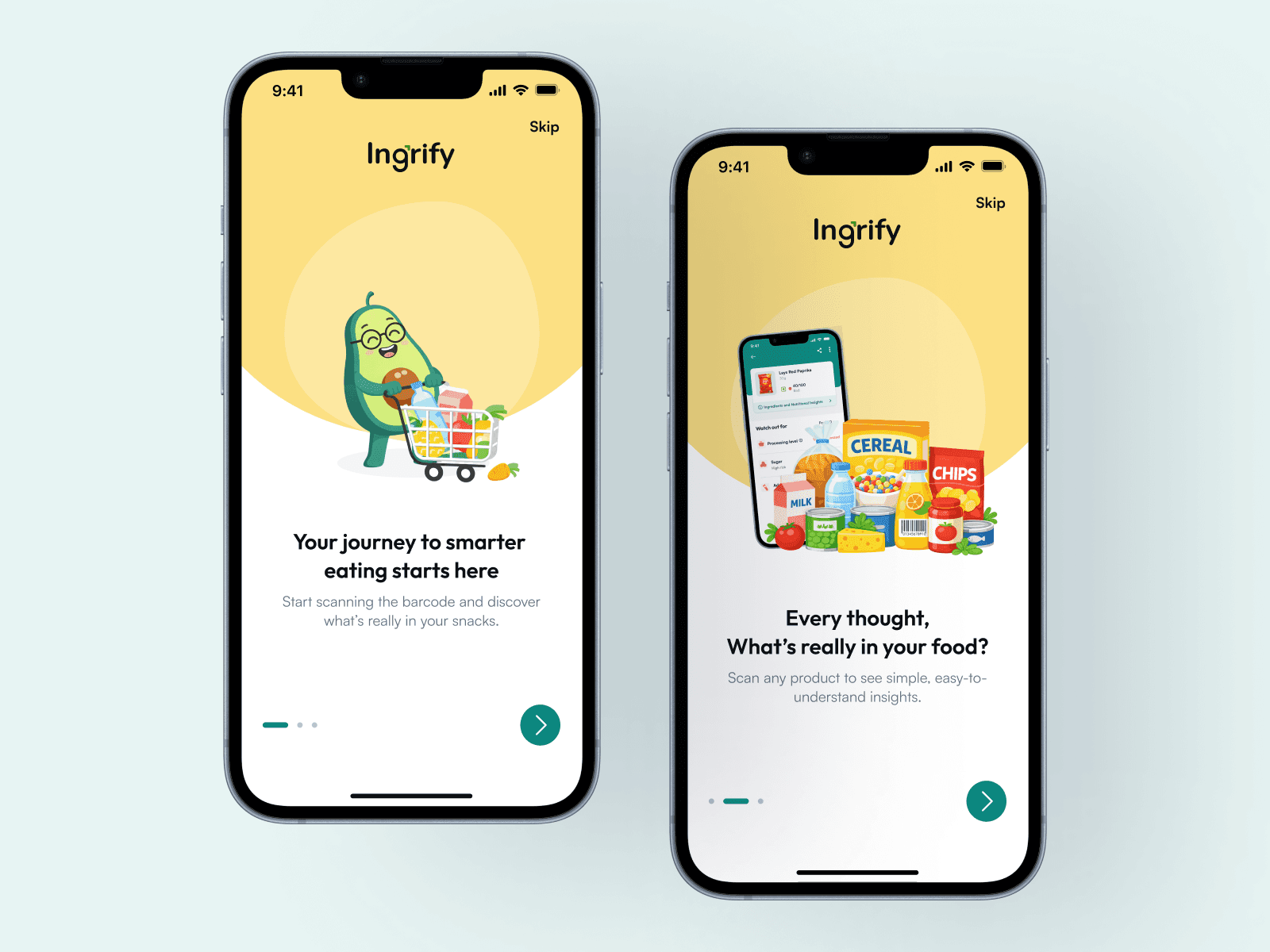
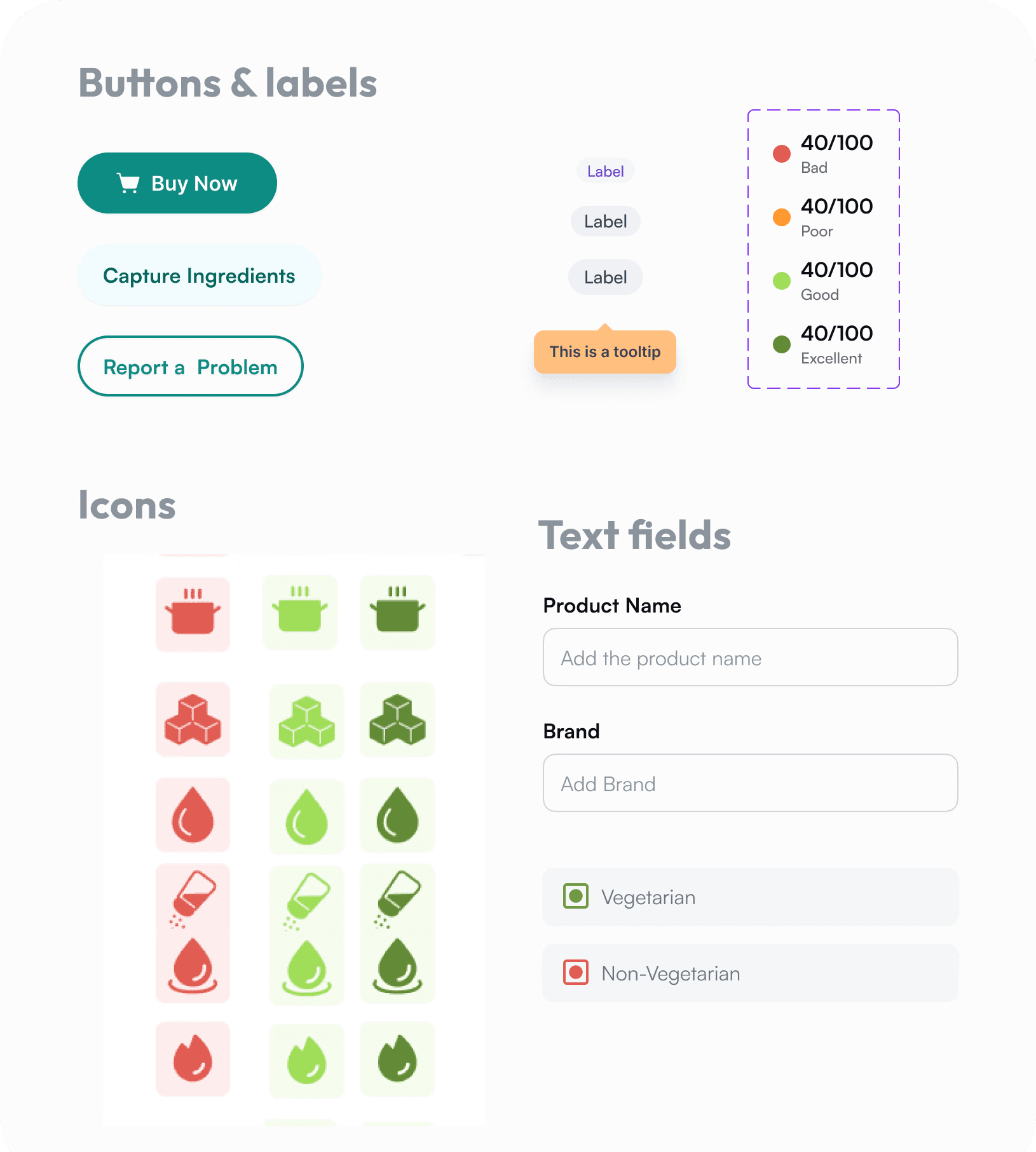
Creating the brand:
A playful approach to healthy eating
Creating the brand:
A playful approach to healthy eating




Testing & Iterations/
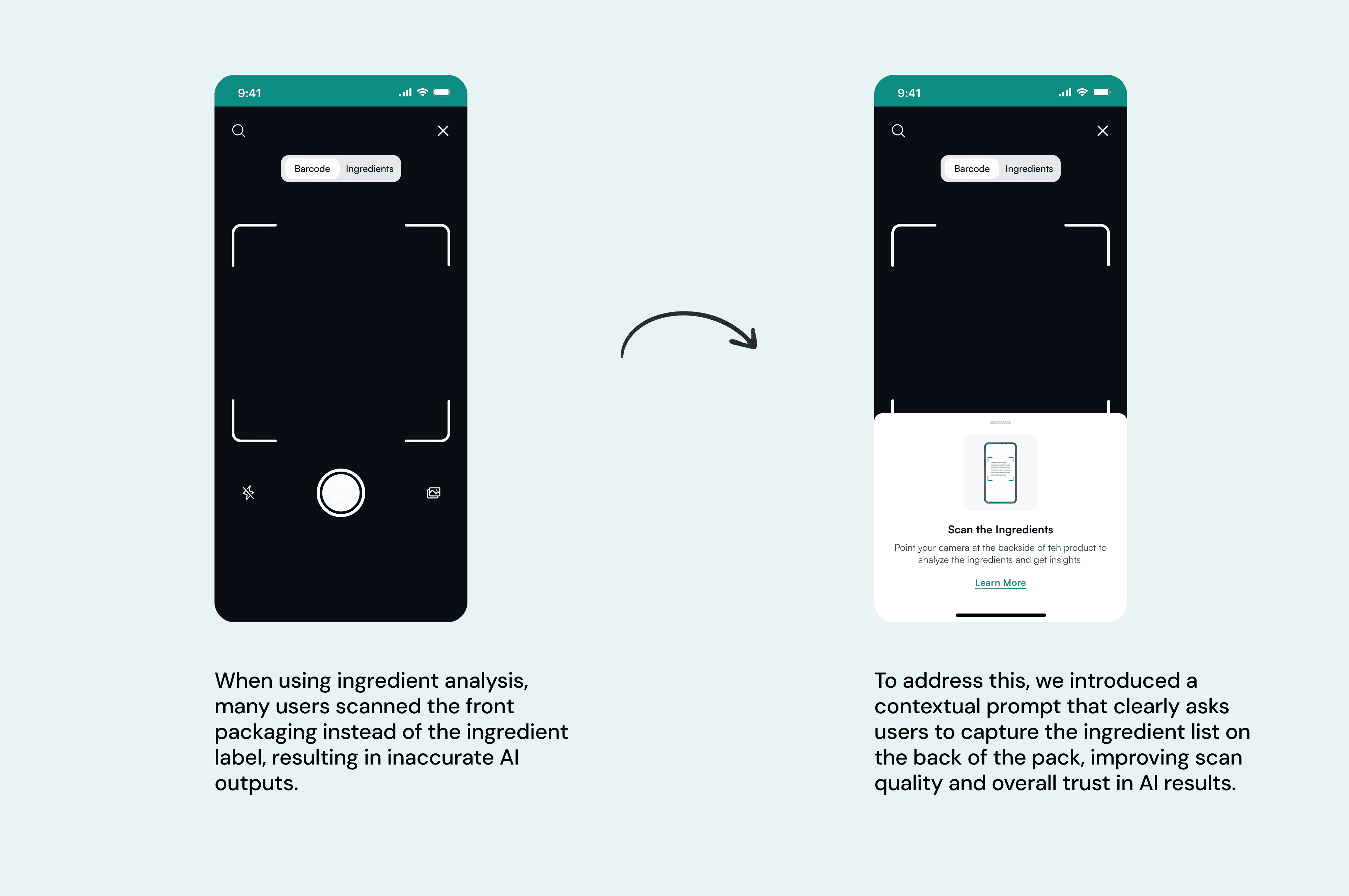
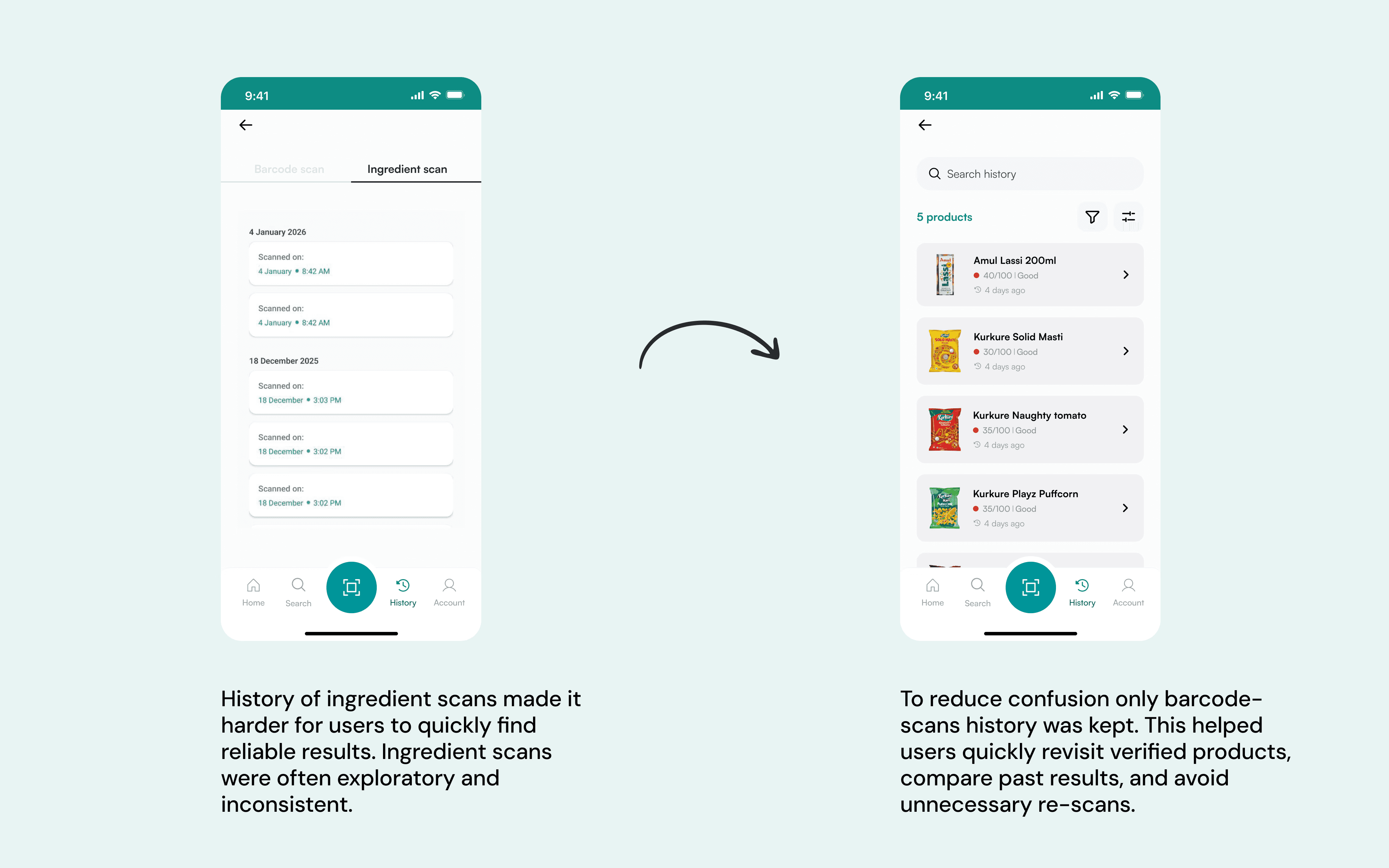
Internal Testing was done to quickly validate core flows, this helped identify technical edge cases, performance issues, and accuracy gaps. Based on user feedback and testing the product underwent few round of iterations.
Design Decisions & Trade-offs/
Barcode vs AI scan
Barcode for speed and accuracy on known products; AI as fallback when data is missing.
Barcode vs AI scan
Barcode for speed and accuracy on known products; AI as fallback when data is missing.
Features
Non-essential features were cut to validate the core scan experience fast.
Features
Non-essential features were cut to validate the core scan experience fast.
Personalized scoring
Generic scores reduce friction; personalization is layered in only when users opt in.
Personalized scoring
Generic scores reduce friction; personalization is layered in only when users opt in.
Sustainability
Reducing repeated AI scans lowered costs and improved long-term scalability.
Sustainability
Reducing repeated AI scans lowered costs and improved long-term scalability.
Success Metrics/
The success of this app and it’s features were measured by:
📈 Adoption & Engagement
Growth in active users and scan frequency, indicates that users found real value in scanning products.
📈 Adoption & Engagement
Growth in active users and scan frequency, indicates that users found real value in scanning products.
📈 Adoption & Engagement
Growth in active users and scan frequency, indicates that users found real value in scanning products.
⭐ Trust & Satisfaction
High app ratings and repeat usage, validates that ingredient insights were clear, and easy to act on.
⭐ Trust & Satisfaction
High app ratings and repeat usage, validates that ingredient insights were clear, and easy to act on.
⭐ Trust & Satisfaction
High app ratings and repeat usage, validates that ingredient insights were clear, and easy to act on.
🧠 Coverage & Cost Efficiency
Improved product database through user-added products, reducing repeated AI analysis costs.
🧠 Coverage & Cost Efficiency
Improved product database through user-added products, reducing repeated AI analysis costs.
Key Learnings/
Collaboration & Communication
I learned the importance of close collaboration with stakeholders and developers in an early-stage product. I learned how to take a stand on design decisions by backing them with user research, competitive insights, and clear success metrics rather than opinions. This helped align teams, navigate trade-offs around cost and feasibility, and ship decisions that balanced user trust, technical constraints, and business goals.
Designing for imperfect data
Working with third-party databases meant scan failures, mismatches, and incomplete results were inevitable. Instead of hiding these limitations, we designed clear fallbacks ingredient scan, AI analysis, and user reporting to keep the experience intact even when the system wasn’t perfect.